Year 10 History. Change the Date: Lessons 3-5
Grade Level: 10
Subject Area: History
Duration: 2 lessons
Learning Objectives
Content Descriptions
Knowing and Understanding
AC9HH10K18: continuities and changes in perspectives, responses, beliefs and values that have influenced the Australian way of life
AC9HH10K09: the causes of First Nations Australians’ campaigns for rights and freedoms before 1965, such as discriminatory legislation and policies, the 1938 Day of Mourning and the Stolen Generations
Questioning and Research
AC9HH10S01: develop and modify a range of historical questions about the past to inform historical inquiry
Using Historical Sources
AC9HH10S03: identify the origin and content of sources, and explain the purpose and context of primary and secondary sources
AC9HH10S04: explain the usefulness of primary and secondary sources, and the reliability of the information as evidence
Historical Perspectives and Interpretations
AC9HH10206: compare perspectives in sources and explain how these are influenced by significant events, ideas, locations, beliefs and values
Communicating
AC9HH10S08: create descriptions, explanations and historical arguments, using historical knowledge, concepts and terms that incorporate and acknowledge evidence from sources
Relevent Unit
Aboriginal Studies | HistoryRelevent Stage
Stage 6
Year 10 History. Change the Date: Lessons 1 – 2
Grade Level: 10
Subject Area: History
Duration: 2-3 lessons
Learning Objectives
Content Descriptions
Knowledge and Understanding
AC9HH10K09: the causes of First Nations Australians’ campaigns for rights and freedoms before 1965, such as discriminatory legislation and policies, the 1938 Day of Mourning and the Stolen Generations
AC9HH10K10: the contributions of significant individuals and groups in the campaign for the recognition of the rights of First Nations Australians and the extent to which they brought change to Australian society
AC9HH10K11: the significant events and methods in the movement for the civil rights of First Nations Australians and the extent to which they contributed to change
Questioning and Research
AC9HH10S02: locate, identify and compare primary and secondary sources to use in a historical inquiry
Historical Perspectives and Interpretations
AC9HH10206: compare perspectives in sources and explain how these are influenced by significant events, ideas, locations, beliefs and values
Relevent Unit
Aboriginal Studies | HistoryRelevent Stage
Stage 6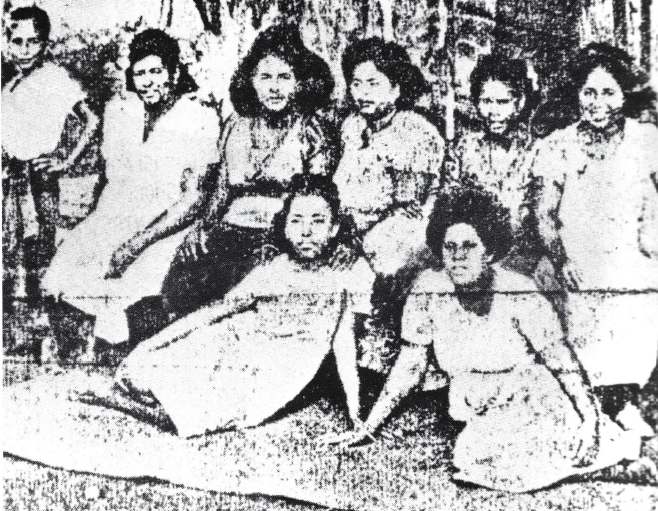
Torres Strait at War, Lesson 3
Grade Level: years 9 and 10
Sub jest Rea; History, Aboriginal Studies
Duration; 1- 2 lessons
Students will explore the changing roles of Torres Strait Islander women left defenceless on their outer islands.
Content Descriptions
Sub-Strand: World War Two
AC9HH10K04: the effects of the Second World War, with a particular emphasis on the continuities and changes on the Australian home front, such as the changing roles of women and First Nations Australians, and the use of wartime government controls.
AC9HH10K12: the significant events, individuals and groups in the women’s movement in Australia, and how they have changed the role and status of women
Sub-Strand: Questioning and Researching: Communicating.
AC9HH10S08: create descriptions, explanations and historical arguments, using historical knowledge, concepts and terms that incorporate and acknowledge evidence from sources
AC9HH10S02: locate, identify and compare primary and secondary sources to use in a historical inquiry.
Sub-Strand: Historical Perspectives and Interpretations
AC9HH10S06: compare perspectives in sources and explain how these are influenced by significant events, ideas, locations, beliefs and values.
Relevent Unit
Aboriginal Studies | HistoryRelevent Stage
Stage 5
Strengthening Wellbeing Through Aboriginal and Torres Strait Islander Games and Connecting to Country
This Year 7 & 8 PDHPE (Personal Development, Health, and Physical Education) lesson focuses on the traditional games of Aboriginal and Torres Strait Islander peoples and the significance of connecting to Country for holistic health and mental wellbeing.
Resources Needed for the Lesson:
-
- First Nations guest speakers or videos to share cultural perspectives. (Video Credit)
- Traditional First Nations games PDF’s and equipment.
- Materials for reflective activities (e.g., journals, art supplies).
Cultural Protocols and Aboriginal/Torres Strait Islander Terminology:
-
- Respect for First Nations cultures and protocols, including acknowledging traditional owners and elders of the land.
- Use culturally appropriate language and terminology when discussing First Nations cultures and traditions. (see PDF terminology fact sheet for teachers)
Relevent Unit
Aboriginal Studies | PD/H/PERelevent Stage
Stage 4 | Year 7 | Year 8
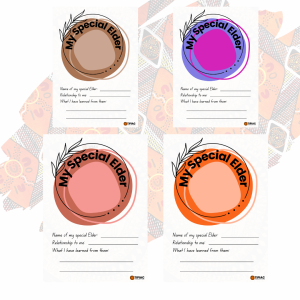
Honouring Our Elders – Connecting to Country
This lesson aims to introduce preschool children to the concept of Elders and their role in Aboriginal and Torres Strait Islander communities. It focuses on fostering a sense of respect, appreciation, and understanding for Elders, their knowledge, and their connection to Country.
Relevent Unit
Aboriginal Studies | Language | LiteracyRelevent Stage
Early Learning Stage 1 | Preschool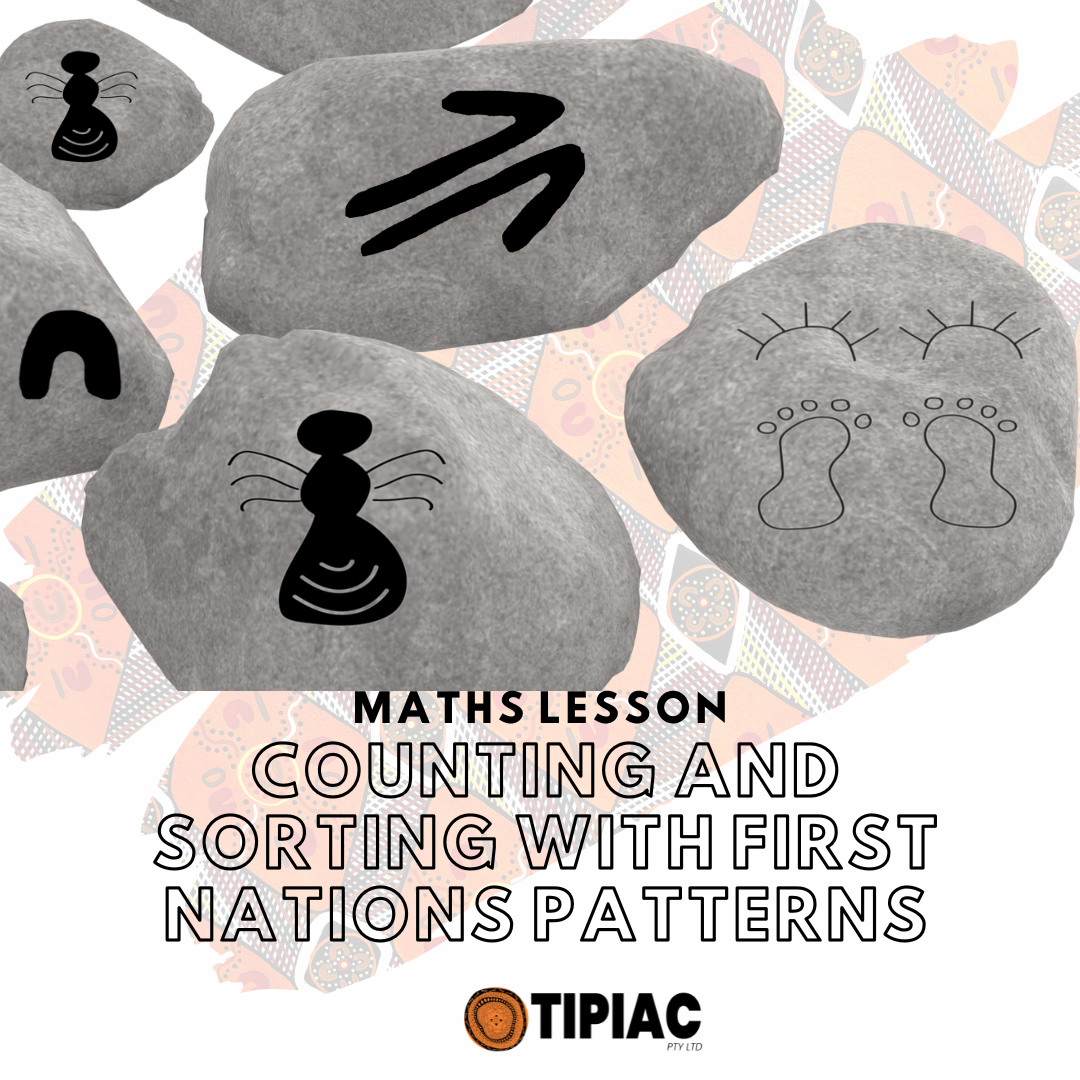
Counting and Sorting with First Nations Patterns
“Counting and Sorting with First Nations Patterns”
Objective: In this lesson, 4-7 year old children will explore First Nations patterns, practice counting, and develop sorting skills while celebrating Indigenous cultures.
Materials:
- First Nations pattern cards or printouts (link in worksheets)
- Counting objects (e.g., beads, buttons, or small toys)
- Small containers or bowls for sorting
- Markers, crayons, or coloured pencils
- Glue and scissors
- Large paper or cardboard for group activities
Duration: Approximately 45-60 minutes
Relevent Unit
Aboriginal Studies | MathematicsRelevent Stage
Early Learning Stage 1 | Preschool | Stage 1 | Stage 2
Totems & how they connect First Nations people to their land and ancestors
Overview:
This lesson is designed for Year 3-4 students and aims to deepen their understanding of Gumbaynggirr culture and the role totems play in connecting people to their land and ancestors.
Relevent Unit
Aboriginal Studies | Geography | History | Language | Literacy | PD/H/PERelevent Stage
Stage 1 | Stage 2 | Stage 3
Totems and their significance in Gumbaynggirr culture
Overview:
This lesson is designed for early years learning students and aims to introduce students to the concept of totems and their significance in Gumbaynggirr culture.
Relevent Unit
Aboriginal Studies | Geography | History | LiteracyRelevent Stage
Early Learning Stage 1 | Preschool
Voice to Parliament – An Aboriginal Perspective

Voice to Parliament – An Aboriginal Perspective
In this unit, students will explore the history, significance, and importance of the Voice to Parliament from an Aboriginal and Torres Strait Islander perspective. They will develop an understanding of the role of political parties and independent representatives in Australia’s system of government, including the formation of governments, and how this system has impacted Aboriginal and Torres Strait Islander peoples. Through the exploration of primary and secondary sources, students will critically analyse the current political climate and the ongoing struggle for recognition and representation. The unit will culminate in students developing and presenting their own proposals for constitutional reform that incorporates the Voice to Parliament.
Outcomes:
- Develop an understanding of the significance of the Voice to Parliament from an Aboriginal and Torres Strait Islander perspective.
- Analyse the role of political parties and independent representatives in Australia’s system of government, including the formation of governments, and how this system has impacted Aboriginal and Torres Strait Islander peoples.
- Critically analyse the current political climate and the ongoing struggle for recognition and representation.
- Develop and present proposals for constitutional reform that incorporates the Voice to Parliament.
Relevent Unit
Aboriginal Studies | History | LiteracyRelevent Stage
Stage 3 | Stage 4 | Stage 5 | Stage 6
Using First Nations Symbols in Your Literacy Lessons
Using First Nations Symbols in Your Literacy Lessons
Subject: Aboriginal Studies, English, Literacy
Relevent Unit
Aboriginal Studies | Geography | History | Language | LiteracyRelevent Stage
Early Learning Stage 1 | Preschool | Stage 1 | Stage 2 | Stage 3 | Stage 4
English – First Nations Weaving
This lesson will focus on developing students’ literacy skills by engaging with Aboriginal and Torres Strait Islander weaving stories and weaving terminology.
Relevent Unit
History | Language | LiteracyRelevent Stage
Stage 3 | Stage 4 | Stage 5
The Voice to Parliament: A First Nations Perspective
Grade level: Year 7
Subject Area: English
Duration: 2-3 lessons
Learning Objectives:
Students will:
- Gain a deeper understanding of The Voice to Parliament and its importance to First Nations Australians
- Analyse a range of texts and perspectives related to The Voice to Parliament
- Develop their critical literacy skills by identifying and evaluating the use of language and techniques in texts related to The Voice to Parliament
- Create their own persuasive piece related to The Voice to Parliament from a First Nations perspective.